Recyclers and Soil Stabilizers

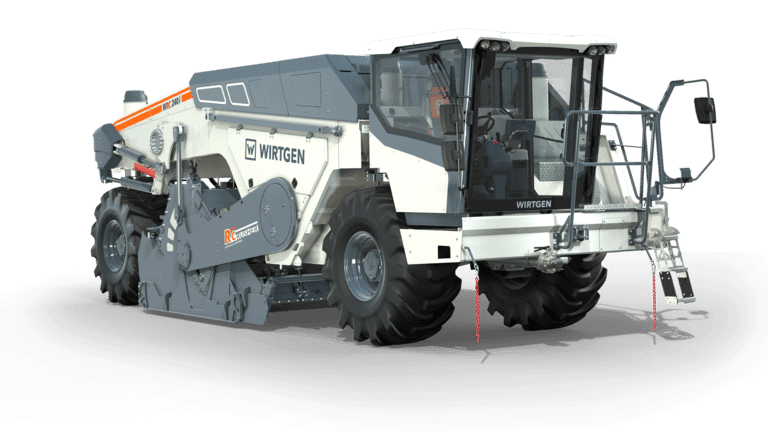
WRC 240I

High-performance, in-situ rock crushing and homogeneous mixing The innovative Rock Crusher with its high-performance crushing, screening, and mixing unit can crush, process, and homogenize hardcore, concrete fragments, cobblestones, and rocks at production rates of up to 600 t/h (661 t/h). With a working width of 2.32 m and a maximum working depth of 510 mm, […]

WRC 240I Read More »

WLV 1

Preliminary testing to determine the mix quality

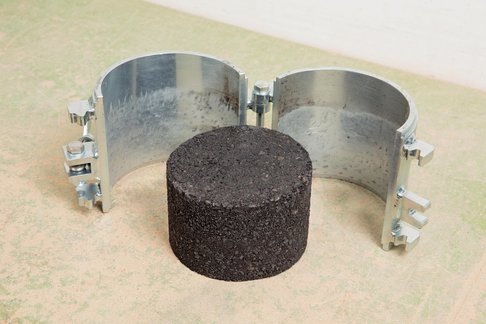
The WLV 1 laboratory compactor makes it easy to produce test specimens.

The compaction process is monitored and documented by means of a wire-rope sensor and display.

The high-quality device is perfectly tailored to the cold recycling process and meets the high standards of quality applicable to testing laboratories.

WLV 1 Read More »

WLM 30

Preliminary testing to determine the mix quality

The laboratory-scale mixer is used to define the suitable mix composition in the shortest possible time.

The high-quality machine is perfectly tailored to the cold recycling process and meets the high standards of quality applicable to testing laboratories.

WLM 30 Read More »

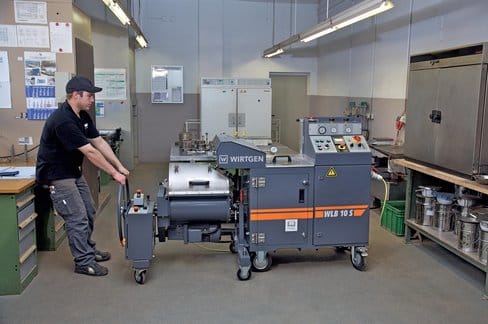
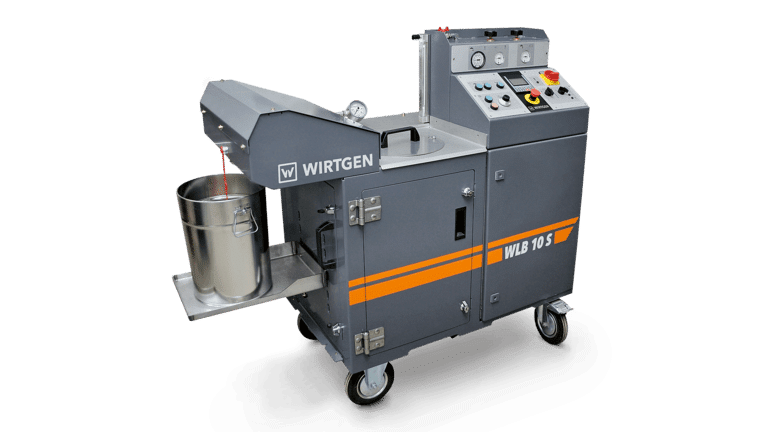
WLB 10 S

Preliminary testing to determine the mix quality

The foamed bitumen laboratory unit calculates simple, precise series of measurements of the optimum foamed bitumen properties.

In the process, the various parameters can be easily varied.

The high-quality machine is specifically designed for the cold recycling process and meets the high standards of quality set that apply to testing laboratories.

WLB 10 S Read More »

WS250

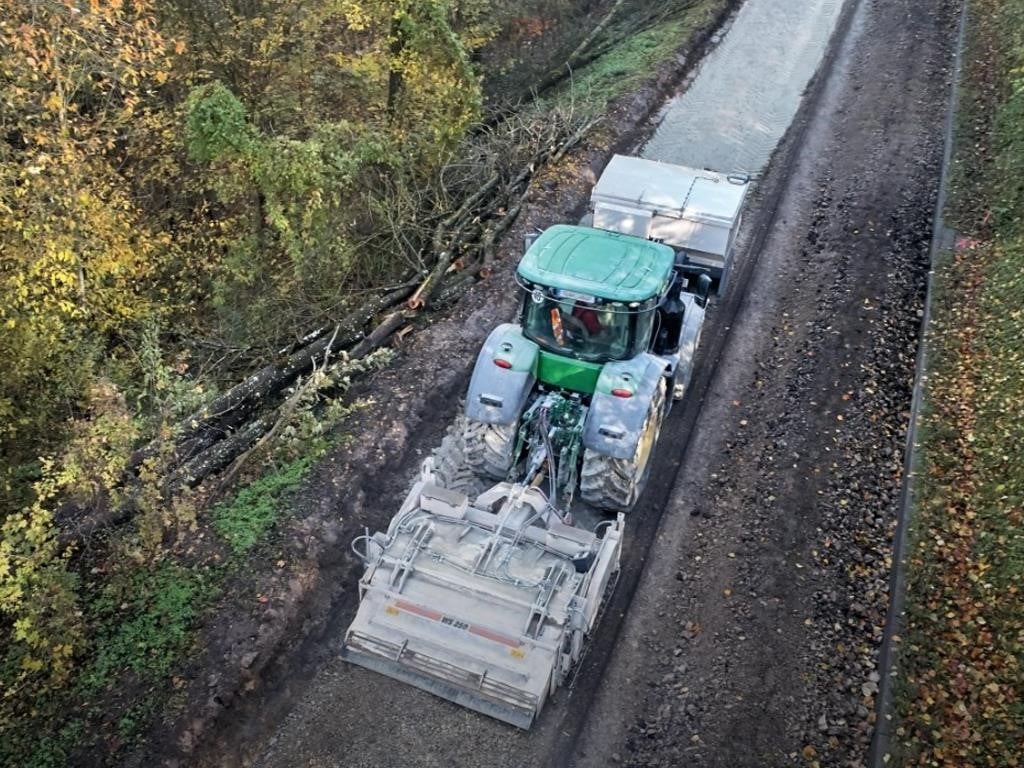
WIRTGEN WS250 — TRACTOR-TOWED STABILIZER

The tractor-towed stabilizer can be attached to a tractor in a few swift moves. The adjustable rotor plate ensures the homogeneous mixing quality of binding agent and soil. Side plates which move on skids, the mechanical belt drive on each side and the effective milling and mixing rotor contribute to the high performance. In the soil improvement process, the tractor-towed stabilizer produces soils suitable for placing and compacting, while in the soil stabilization process, it creates load-bearing surfaces.

THE POWERFUL UNIT FOR EFFECTIVE SOIL STABILZATION
• The WS 220 tractor-towed stabilizer is designed for efficient soil stabilization at a working width of 7′ 1″ (2.15 m).

• Their range of applications covers both soil improvement and soil strengthening measures.

• In soil improvement, the tractor-towed stabilizers produce soils suitable for placing and compacting to create embankments, slopes, backfills or site haulage roads.

• In soil strengthening, they create load-bearing surfaces for the construction of parking lots, roads, sports grounds, track beds, harbor facilities, airports or industrial parks.

FEATURES

HEAVY-DUTY LINKAGE
• Reliable Transmission of Power: Heavy-duty shaft drive for reliable transmission of the engine power to the milling and mixing rotor by means of an overload clutch

• Three-Point Hitch: Standardized three-point hitch tailored to field requirements.

• Easy Attachment: Attachment to the tractor is completed quickly in a few simple steps.

EFFICIENT MILLING AND MIXING PERFORMANCE
• Powerful Milling and Mixing Rotor: available with different toolholder systems.
• Mechanical Drive: Highly efficient mechanical belt drives on the left and right.
• Eccentric Milling Rotor Gearbox: Pulley housing always remains above the ground due to eccentric milling drum gearbox.
• Quick Replacement of Cutting Tools: Easy replacement of cutting tools using a pneumatic tool extractor.

EFFICIENT WATER METERING
• Reliable Water Spraying System: Microprocessor-controlled spraying system including a heavy-duty water pump and flow meter for exact compliance with the predetermined quantity of water to be added.

• Control Panel with Essential Information: Intuitive operation and monitoring of added water with the integrated (ISOBUS) display on the tractor or an optional touchscreen panel.

EFFECTIVE CONCEPT
• Adjustable Rotor Plate: Adjustable rear rotor plate in extra high position.
• High Contact Pressure: Rotor plate with high contact pressure for homogeneous mixing quality.
• Adjustable Levelling Blade: Mechanically adjustable levelling blade for perfectly even surfaces.
• Adjustable Side Plate: Hydraulically height-adjustable side plates left and right including mechanical retainer.
• Flexible Stone Guard: Flexible stone guard at the front to protect against flying stones.

MAKING A SUCCESSFUL START IN SOIL STABILIZATION
Soil stabilization has been proving its worth for many decades as an economical an environmentally friendly method. The WS 220 and WS 250 tractor-towed stabilizer from Wirtgen enables you to turn your tractor into a perfect soil stabilizer with only a few simple flicks of the wrist.

The compact unit converts instable ground into high-quality construction material, improves compactability, and dispenses with the necessity of an expensive soil exchange. It impresses with its intelligent design and highly economical operation. The unit’s low weight and compact dimensions facilitate transport from one construction site to the next.

Because of the low capital expenditure involved, the combination of towed stabilizer and tractor is ideally suited in particular for small to medium-sized construction projects.

SIMPLE MOUNTING PRINCIPLE
It happens every day: the tractor, used as a towing unit just a minute ago, needs to be converted into a soil stabilizer as quickly as possible. This requirement necessitates a simple yet practical attachment system for the milling and mixing rotor unit. Being geared to flexible and effective operation, the tractor-towed stabilizer from WIRTGEN offers the ideal solution. It is attached to the tractor effortlessly by means of a standardized three-point hitch, using the tractor’s shaft drive at the same time to drive the milling and mixing rotor.

PROTECTION AGAINST FLYING STONES
The rotor housing is additionally equipped with a variable stone guard at the front. The stone guard protects against flying stones and reduces the development of dust. The unit is adjustable in height hydraulically and can be adapted to site conditions.

TRANSLATING POWER INTO PRODUCTIVITY
The success of our tractor-towed stabilizers is guaranteed by their ability to thoroughly mix even the heaviest soils. This is ensured by the powerful, mechanically driven milling and mixing rotor, which homogenizes the material effectively across the full working width and evenly mixes in the pre-spread binding agents, such as lime or cement. Belt drives are arranged on both sides of the milling and mixing rotor.

This dual drive concept is very efficient win translating engine power into milling performance. In addition, the eccentric rotor gearbox causes the pulley housing to always remain above the ground. The stabilizer’s intelligent drive concept has the positive side effect of reducing the tractor’s fuel consumption. The spring-loaded belt tensioner ensures optimum transmission of power at all times.

GEARED FOR TOUGH OPERATIONS
The milling and mixing rotor-core element of the tractor-towed stabilizer – can optionally be equipped with the tried-and-tested quick-change toolholder system HT22 for tough everyday operation on the construction site. With this system, WIRTGEN builds on its experience of many years in cutting technology.

A precisely defined arrangement of the cutting tools on the rotor ensures smooth machine behavior and perfect milling and mixing results. Additional marks in favor of this system are optimum tool rotations, extremely low wear and tear, easy tool replacement, and easy monitoring of the degree of wear of the upper toolholder parts.

The intelligently arranged toolholders allow sufficient space for the material to be stabilized. The mode of operation minimizes material stress, which extends the useful life and improves the profitability of the entire machine. The pneumatic tool extractor and easily accessible rotor enable cutting tools to be replaced quickly and conveniently.

ADJUSTABLE ROTOR PLATE
The WS 220 and WS 250 tractor-towed stabilizers are the most powerful stabilizers in their class. This is attributable, to a significant extent, to the mixing chamber which has been designed in line with field requirements and greatly contributes to the homogeneous mixing of binders and soil. The rotor housing design and high position of the rotor plate have been perfectly tailored to the powerful milling and mixing rotor.

Hydraulic cylinders and springs at the rear rotor plate ensure optimum contact pressure. These features ensure an optimum quantity of the construction material in the mixing chamber at all times and also create an even surface behind the tractor-towed stabilizer.

WIRTGEN stabilizers are the ideal candidates also for homogenizing soils averse to compaction, such as non-uniform soil mixtures.

PERFECT FINISH
Following thorough mixing, the soil is leveled across the full width by the permanently pre-tensioned rotor plate which is fitted with an adjustable leveling blade. This design ensures that an optimum quantity of construction material mix is in the mixing chamber at all times, and additionally creates an even surface behind the tractor-towed stabilizer.

The working depth is set via the tractor’s rear power lift. Powerful hydraulic cylinders and springs with high spring rate ensure steady contact pressure at the rear rotor plate. Depending on the working depth and type of soil to be stabilized, the angle of the leveling blade to the rotor plate can additionally be adjusted manually to ensure optimum distribution of the material at all times. After compaction by suitable rollers, the stabilized soil meets the specified quality standards.

SOIL IMPROVEMENT – FOR BETTER QUALITY
Whether heavy, course-grained or sandy subgrade material: the tractor-towed stabilizer can be relied on to convert it into soil that is highly suitable for placing and compacting. If too coarse, the material to be stabilized is crushed in the mixing chamber by the milling and mixing rotor. Soft soil is covered with lime spread by, for instance, a binder spreader prior to treatment. Subsequent homogeneous mixing by the milling and mixing rotor causes the lime to remove the excess humidity from the soil.

In earthmoving operations, soil improvement pays off in the construction of, for instance, dams and embankments, backfilling or site haulage roads. Soil improvement has shown itself to be eminently suitable also for landfills with clayey subsoils. Soil processed with suitable binding agents is practically unsusceptible to water and offers optimum conditions for further compaction.

GROUNDWORK FOR HEAVY LOADS
Soil stabilization with added binding agents like cement is a patent remedy for increasing the long-term resistance against stresses resulting from traffic and weather conditions. The cement is pre-spread by, for instance, a binder spreader and is then thoroughly mixed with the soil by the milling and mixing rotor.

Soil stabilization produces a ground of permanently high bearing capacity, strength and excellent resistance to frost. Soil stabilization guarantees a permanently high degree of volume stability. Analyses and samples taken on site confirm that the specified targets have been met. The stabilized surfaces are ideally suited for the construction of parking lots, roads, sports grounds, track beds, harbor docks, airfields, and industrial facilities.

Similar models may be shown in addition to the featured model. Equipment may be shown with options.

Specifications are subject to change without prior notice.

WS250 Read More »

KMA240i

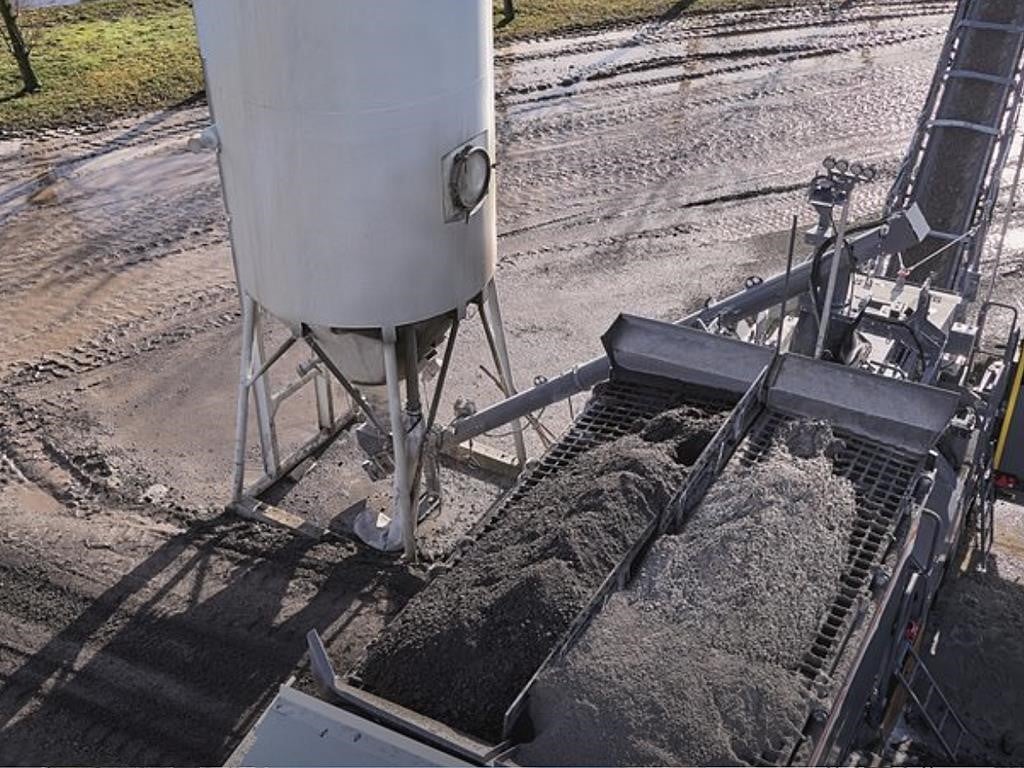
WIRTGEN KMA240i — MOBILE COLD RECYCLING MIXING PLANT

The mobile cold recycling mixing plant is simple to transport and quick to set up in the direct vicinity of the operation site. The robust twin-shaft compulsory mixer achieves high mixing performance levels. Microprocessor-controlled injection systems for the addition of a wide range of binding agents ensure that the materials are mixed precisely to formula. The slewing discharge conveyor with its wide range of motion enables the processed cold mix to be stockpiled or continually loaded onto transport vehicles.

EFFECTIVE AND ENVIRONMENTALLY FRIENDLY MIX PREPARATION
• The KMA 240i high-performance cold recycling mixing plant is designed for the resource-friendly production of high-quality mix at a massive mixing capacity of more than 265 t (240 tons) per hour.

• The KMA 240i is capable of processing a wide variety of base materials, such as recycled construction materials, milled asphalt material, demolished concrete, or virgin road construction materials, as well as binding agents, such as cement, bitumen emulsion, or foamed bitumen.

• The mix is ideally suited for any type of construction project, e.g. for cement-treated or long-lasting bituminous base layers in road and path construction, parking lots, and industrial areas.

• The mobile design of the cold recycling mixing plant allows the machine to be transported directly to the job site, saving both time and money.

• The ability to completely recycle materials in combination with cold processing results in significant CO2 and energy savings with minimal construction costs and project periods.

RECIPE FOR SUCCESS FOR HARD-WEARING ROAD SURFACES
The KMA 240(i) cold recycling mixing plant produces cold mix that can be paved immediately for a wide variety of construction projects, such as cement-treated base (CTB) layers for freeways. Due to the particularly generous, continuous addition of cement, enormous daily outputs can be achieved with maximum precision. In addition to CTB and RCC (roller-compacted concrete), cold mix can be produced that is stabilized with bitumen emulsion or foamed bitumen (BSM). The road surfaces produced from these high-quality cold mixes then stand out due to their excellent bearing capacity, resistance to deformation, and long service life.

ECO-FRIENDLY TECHNOLOGY
The highly mobile cold recycling mixing plant can be easily transported from site to site and quickly set up in the near vicinity. This saves time, truck capacity, and is also extremely environmentally friendly, making it possible to achieve up to 60% fewer CO2 emissions thanks to cold processing, a 90% reduction in transport volumes, and up to 50% lower total costs compared to conventional construction methods – in other.

A WIDE RANGE OF APPLICATIONS
A particularly impressive feature of the KMA 240(i) is its ability to process a variety of different, non-cohesive raw materials. As a result, mixes can be produced from a wide variety of virgin construction materials, reclaimed recycled materials, and binding agents. Virgin construction materials include raw materials such as mixtures of sand, gravel, or crushed stone. Recycled construction materials include milled material and all other materials reclaimed from old road surfaces or processed rubble, e.g. RCL (recycled gravel) or asphalt milled material. Cement, bitumen emulsion, or foamed bitumen supplied by silo or tanker trucks are the most suitable binding agents. The required quantity of binding agents and aggregates is precisely determined by preliminary tests in the road construction laboratory. Based on these specifications, the plant then prepares the homogeneous mix with the desired properties. Foamed bitumen for the construction of durable BSM base layers is an extremely cost-effective binding agent, as the quantities added are extremely low.

COMPACT TRANSPORT DIMENSIONS
The well-engineered design allows the compact system to be easily and safely “packed up” onto a flatbed truck trailer and transported to the next site, saving both time and money. All you need to do is swivel in the discharge conveyor and operator’s cabin, move the cement charging auger to the transport position, and then hitch up the plant. A common truck is completely sufficient for transporting the plant as all of its connectors are standardized. The compact transport dimensions and low overall weight of the KMA 240 (i) comply with international traffic regulations, eliminating the time-consuming process of applying for special permits in most locations.

RAPID SETUP AND DISASSEMBLY
Setup and disassembly can be carried out quickly and easily without special tools – stable supports are extended and manually unfolded to ensure the plant stands securely. In addition, hydraulically powered, continuously extendable supports are mounted under the water tank and between the axles to support the machine’s weight. The hydraulic supports can be used to precisely level the plant. Fold-out, stable flaps used to set up the loading ramp protect the free space under the plant. The only thing left to do is to swing out the operator’s cabin and discharge conveyor at the push of a button and connect the cement charging auger via quick-release connectors – done!

SMALL FOOTPRINT AND FLEXIBLE CONNECTION OPTIONS
Flexibility was a top priority when designing the mobile mixing plant. This is why connections for water, emulsion, and bitumen are found in a number of locations. The same applies to the cement – whether via a stationary silo on the left or right or fed by hand, anything is possible. This gives you plenty of freedom when determining where to place the KMA 240(i). After all, the plant’s direct proximity to the job site or materials warehouse offers an unbeatable advantage in terms of time, cost, and energy savings.

STAND-ALONE JOB SITE OPERATION
The plant’s own diesel engine not only ensures that it isn’t dependent on the public power grid and guarantees an exceptionally high daily output, but can also be operated extremely efficiently for up to two days on a single tank of fuel.

Similar models may be shown in addition to the featured model. Equipment may be shown with options.

Specifications are subject to change without prior notice.

KMA240i Read More »

W380CRi

WIRTGEN W380CRi – COLD RECYCLERS

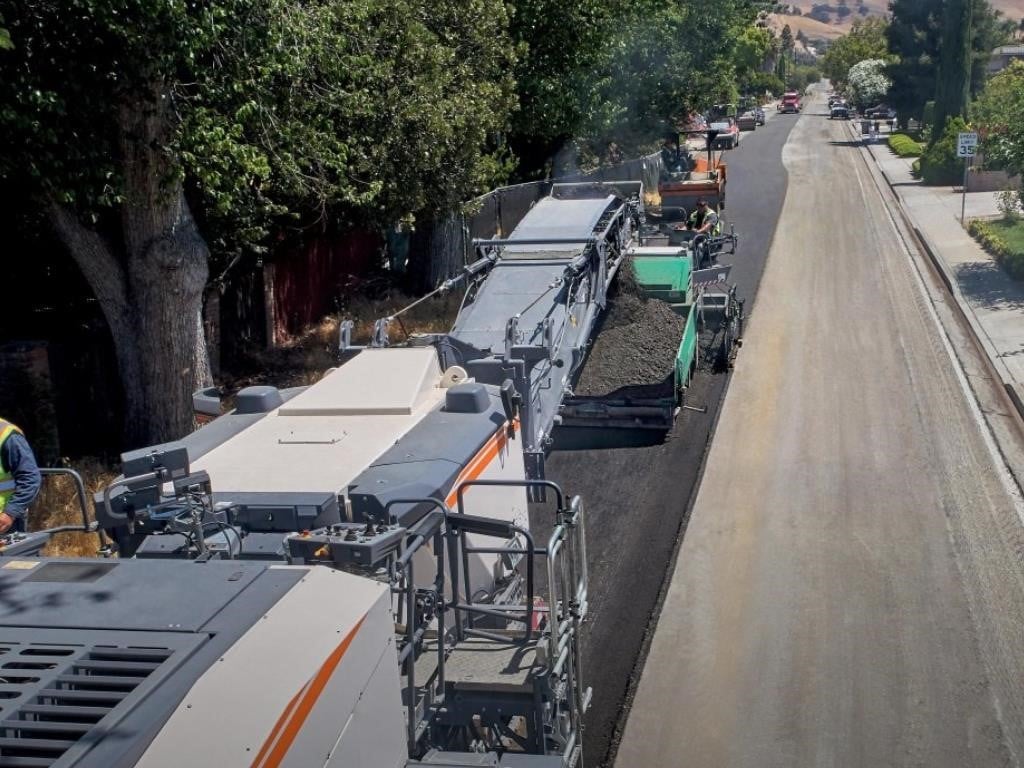
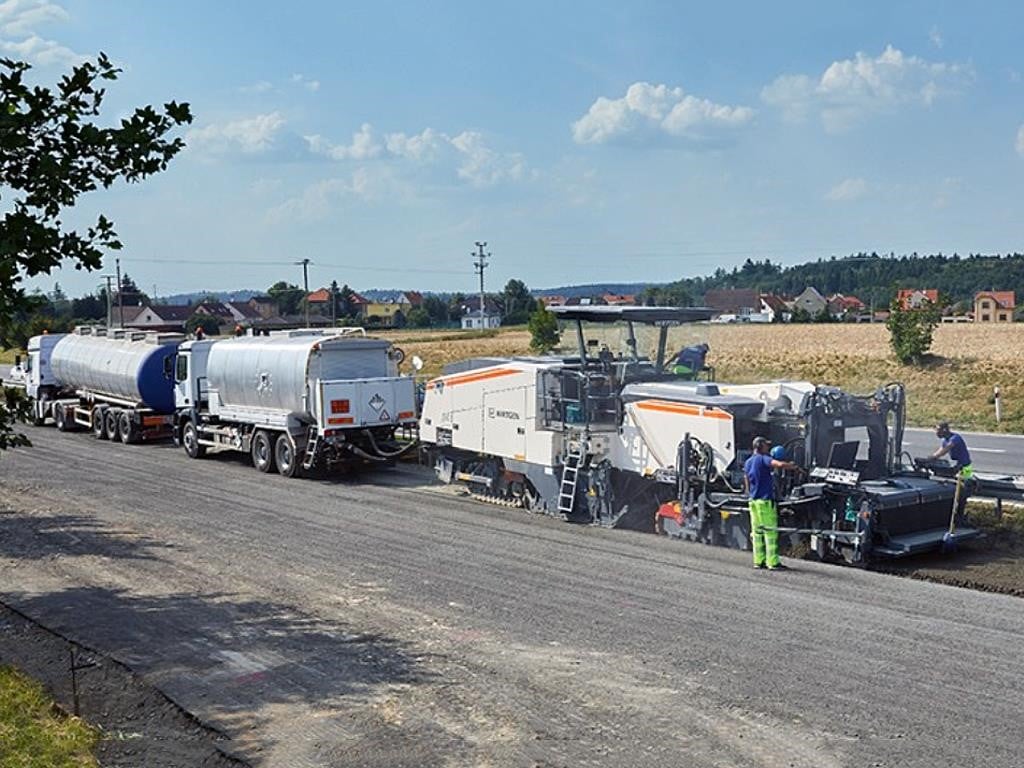
Cold recyclers in the CR series are used for the cost-effective recycling of pavements. Binding agents and water are added in precisely metered quantities by means of microprocessor-controlled injection systems. Cold recyclers with a paving screed use the down-cut process and immediately repave the recycled construction material. In large projects requiring high daily performances, the recycler transfers the recycled construction material via its integrated discharge conveyor to the material hopper of the downstream paver, which immediately repaves it, achieving a high degree of pre-compaction. The recyclers in the CR series additionally can be used as high-performance milling machines.

HIGH QUALITY IN-PLACE RECYCLING OF ASPHALT LAYERS
• Cold In-Place Recycling (CIR) and Full Depth Reclamation (FDR): Machines from the CR series are used as part of a paving train for cost-effective cold in-place recycling of road pavements in a single pass by adding cement, emulsion, or foamed bitumen at a mixing capacity of up to 800 t/h.

• The high-performance W 380 CRi with rear loading is used for rehabilitating complete, extra-wide road surfaces with extremely high daily output.

• Through lateral pre-milling, the cold recyclers can also rehabilitate road pavements that extend beyond the machine’s working width in one pass.

• If required, the cold recyclers can also be used as high-performance milling machines or for granulating road structures.

SIMPLE OPERATING CONCEPT
• Flexible positioning of the main control panels in both directions of operation
• All machine parameters are displayed on a high-resolution color screen
• Four large, clearly structured control panels for operation by the ground crew
• On-board diagnostic system for quick and easy assistance with maintenance procedures
• Many new automated features enhance ease of operation
• High-precision LEVEL PRO levelling system comprising different sensor models

PERFECTION IN VISIBILITY, COMFORT AND ERGONOMIC DESIGN
• Optimized machine geometry ensures perfect visibility
• High-quality camera system comprising up to seven cameras
• Clearly structured, adaptable operator’s platform including canopy
• Powerful LED lighting system for night operations
• Easy start-up and quick modification of the machine to match the specific application

TREMENDOUS PERFORMANCE
• High-powered, high-torque diesel engine
• Minimized engine noise emissions allow around-the-clock operations in urban environments
• Emission standards US Tier 2 or strict emission standards US Tier 4f
• Intelligent engine-machine management system for maximum advance rates
• All-track drive (ASC) and fourfold full-floating lifting column feature ensure optimum traction
• Direct mechanical rotor drive ensures high efficiency

HIGH-PRECISION, RELIABLE INJECTION SYSTEMS
• Integrated injection systems for water, bitumen emulsion and foamed bitumen
• VARIO injection bar – adjustment of injection pressure via variable nozzle openings
• Metering panel with screen for reliable operation and easy monitoring of binder metering
• Electrically heated bitumen system
• Innovative process water monitoring for the production of foamed bitumen
• Automatic self-cleaning and flushing feature for high functional reliability of the injection nozzles

EFFECTIVE CUTTING AND MIXING TECHNOLOGY
• Perfectly designed milling and mixing unit for both recycling and front-loading operations (milling)
• Extremely hard-wearing HT22 quick-change tool holder system
• Hydraulic rotor rotation device and hydraulic or pneumatic pick ejector drift for quick and easy pick replacement
• MCS EXTEND (Multiple Cutting System) available for working widths of 10 ft 6 in (3.2 m), 11 ft 6 in (3.5 m) and 12 ft 6 in (3.8 m)

Similar models may be shown in addition to the featured model. Equipment may be shown with options.

Specifications and data are subject to change without prior notice.

W380CRi Read More »

W240CRi

WIRTGEN W240CRI – COLD RECYCLERS

Cold recyclers in the CR series are used for the cost-effective recycling of pavements. Binding agents and water are added in precisely metered quantities by means of microprocessor-controlled injection systems. Cold recyclers with a paving screed use the down-cut process and immediately repave the recycled construction material. In large projects requiring high daily performances, the recycler transfers the recycled construction material via its integrated discharge conveyor to the material hopper of the downstream paver, which immediately repaves it, achieving a high degree of pre-compaction. The recyclers in the CR series additionally can be used as high-performance milling machines.

HIGH QUALITY IN-PLACE RECYCLING OF ASPHALT LAYERS
• Cold In-Place Recycling (CIR) and Full Depth Reclamation (FDR): Machines from the CR series are used as part of a paving train for cost-effective cold in-place recycling of road pavements in a single pass by adding cement, emulsion, or foamed bitumen at a mixing capacity of up to 800 t/h.

• The compact W 240 CRi cold recycler is designed for easy rehabilitation of lanes using a built-in paving screed.

• Through lateral pre-milling, the cold recyclers can also rehabilitate road pavements that extend beyond the machine’s working width in one pass.

• If required, the cold recyclers can also be used as high-performance milling machines or for granulating road structures.

SIMPLE OPERATING CONCEPT
• Flexible positioning of the main control panels in both directions of operation
• All machine parameters are displayed on a high-resolution color screen
• Four large, clearly structured control panels for operation by the ground crew
• On-board diagnostic system for quick and easy assistance with maintenance procedures
• Many new automated features enhance ease of operation
• High-precision LEVEL PRO levelling system comprising different sensor models

PERFECTION IN VISIBILITY, COMFORT AND ERGONOMIC DESIGN
• Optimized machine geometry ensures perfect visibility
• High-quality camera system comprising up to seven cameras
• Clearly structured, adaptable operator’s platform including canopy
• Powerful LED lighting system for night operations
• Easy start-up and quick modification of the machine to match the specific application

TREMENDOUS PERFORMANCE
• High-powered, high-torque diesel engine
• Minimized engine noise emissions allow around-the-clock operations in urban environments
• Emission standards US Tier 2 or strict emission standards US Tier 4f
• Intelligent engine-machine management system for maximum advance rates
• All-track drive (ASC) and fourfold full-floating lifting column feature ensure optimum traction
• Direct mechanical rotor drive ensures high efficiency

HIGH-PRECISION, RELIABLE INJECTION SYSTEMS
• Integrated injection systems for water, bitumen emulsion and foamed bitumen
• VARIO injection bar – adjustment of injection pressure via variable nozzle openings
• Metering panel with screen for reliable operation and easy monitoring of binder metering
• Electrically heated bitumen system
• Innovative process water monitoring for the production of foamed bitumen
• Automatic self-cleaning and flushing feature for high functional reliability of the injection nozzles

EFFECTIVE CUTTING AND MIXING TECHNOLOGY
• Perfectly designed milling and mixing unit for both recycling and front-loading operations (milling)
• Extremely hard-wearing HT22 quick-change tool holder system
• Hydraulic rotor rotation device and hydraulic or pneumatic pick ejector drift for quick and easy pick replacement
• MCS EXTEND (Multiple Cutting System) available for working widths of 10 ft 6 in (3.2 m), 11 ft 6 in (3.5 m) and 12 ft 6 in (3.8 m)

Similar models may be shown in addition to the featured model. Equipment may be shown with options.

Specifications and data are subject to change without prior notice.

W240CRi Read More »

WR250i

WIRTGEN WR250i – COLD RECYCLERS AND SOIL STABILIZERS

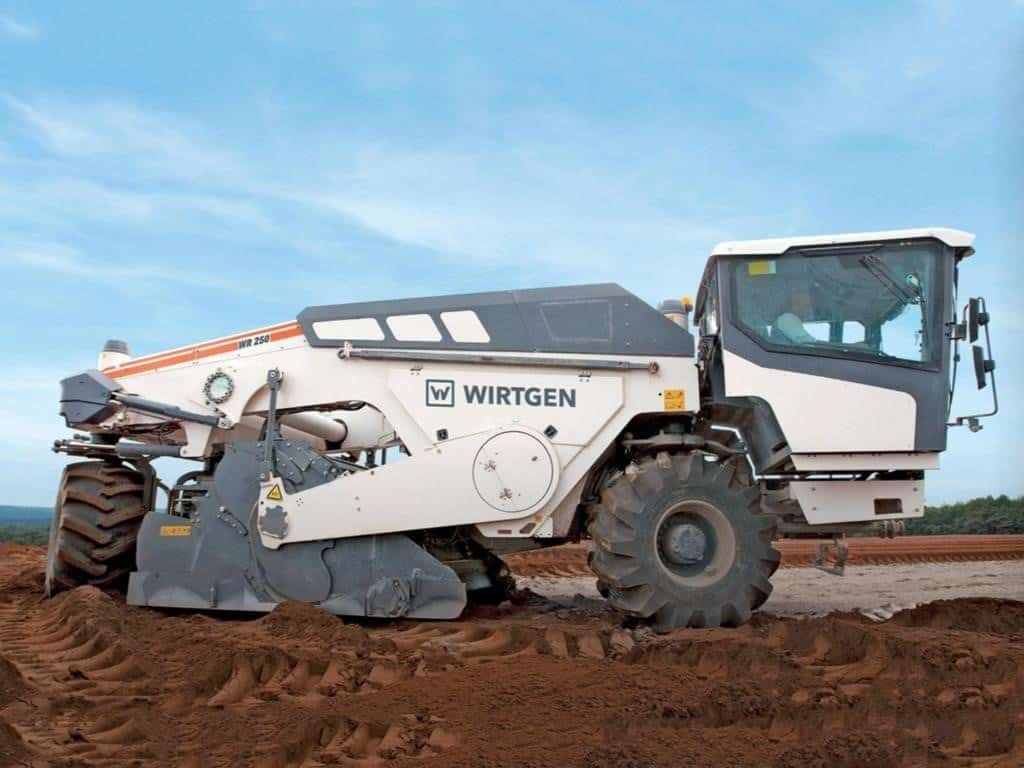
Cold recyclers are used to prepare asphalt pavement on site. In this process, the existing pavement is granulated with the milling and mixing rotor and prepared by adding precise amounts of bituminous binding agents, cement and water. The result is a homogeneous material that can be used to directly repave the surface. Soil stabilizers use the milling and mixing rotor to mix pre-spread binding agents such as lime or cement into the existing, less stable soil and transform it into a high-quality material directly on site.

The recyclers have a variable mixing chamber and microprocessor-controlled injection systems for the addition of bitumen emulsion, water and foamed bitumen. In the soil stabilization process, the all-wheel drive, all-terrain machines mix binding agents into existing soils, producing load-bearing soils with ideal properties for further roadworks. In the cold recycling process, the existing pavement is milled off and the milled material is then homogeneously mixed with the added binding agents. The new mix of materials then serves as a basis for base courses.

THE COMPACT RECYCLER WITH A DIVERSE APPLICATION RANGE
• Compact recycler of the WR series with an increased working width, specifically for the US market.

• With a working width of 7 ft. 10 in. (2.40 m) and a maximum working depth of 19.7 in. (500 mm), it is suitable for a diversity of operations in soil stabilizing and cold recycling.

• The intuitive operating concept provides optimum comfort for an efficient work process and high productivity levels.

• When it comes to soil stabilizing, the ideal performance range is between 10,000 and 50,000 ft² a day (1,000 and 5,000 m²/day).

• For cold recycling, the ideal performance range is between 8,000 ft² per hour (800 m²/h) and 3.9 to 5.9 in. (10 to 15 cm) of asphalt thickness.

SOIL STABILIZATION WITH WR MODEL SERIES
Soil stabilization outperforms soil replacement thanks to few truck trips, shorter construction times, conserved resources, and lower CO2 emissions. The WR soil stabilizer uses its powerful milling and mixing rotor to mix pre-spread binding agents such as lime or cement into existing soil with insufficient bearing capacity, transforming it into a high-grade building material right on the spot. The resulting homogeneous mixture of soil and binding agent offers excellent tensile, compressive, and shear strength, long-term resistance to water and frost, and volume stability.

COLD RECYCLING WITH WR MODEL SERIES
The WR is equipped with a powerful milling and mixing rotor as well as state-of-the-act injection systems. The cold recycler uses the milling and mixing rotor to mill asphalt pavements, granulates them, sprays binder and water in precisely measured doses, and mixes it all together in a single operation. The new base layers produced on site then stand out thanks to their exceptional bearing capacity.

MIXING PROCEDURES
Cold recycling can either be carried out in-plant by transporting the material recovered from an existing road to a central warehouse and passing it through a mixing plant, or in place- in situ using a cold recycler. In the in-place/in-situ mixing process, a cold recycler granulates the existing pavement and homogeneously mixes in the binding agent and water. In the in-plant mixing process, RAP and crushed rock are transported to a mixing plant near the construction site.

Similar models may be shown in addition to the featured model. Equipment may be shown with options.

Specifications are subject to change without prior notice.

WR250i Read More »